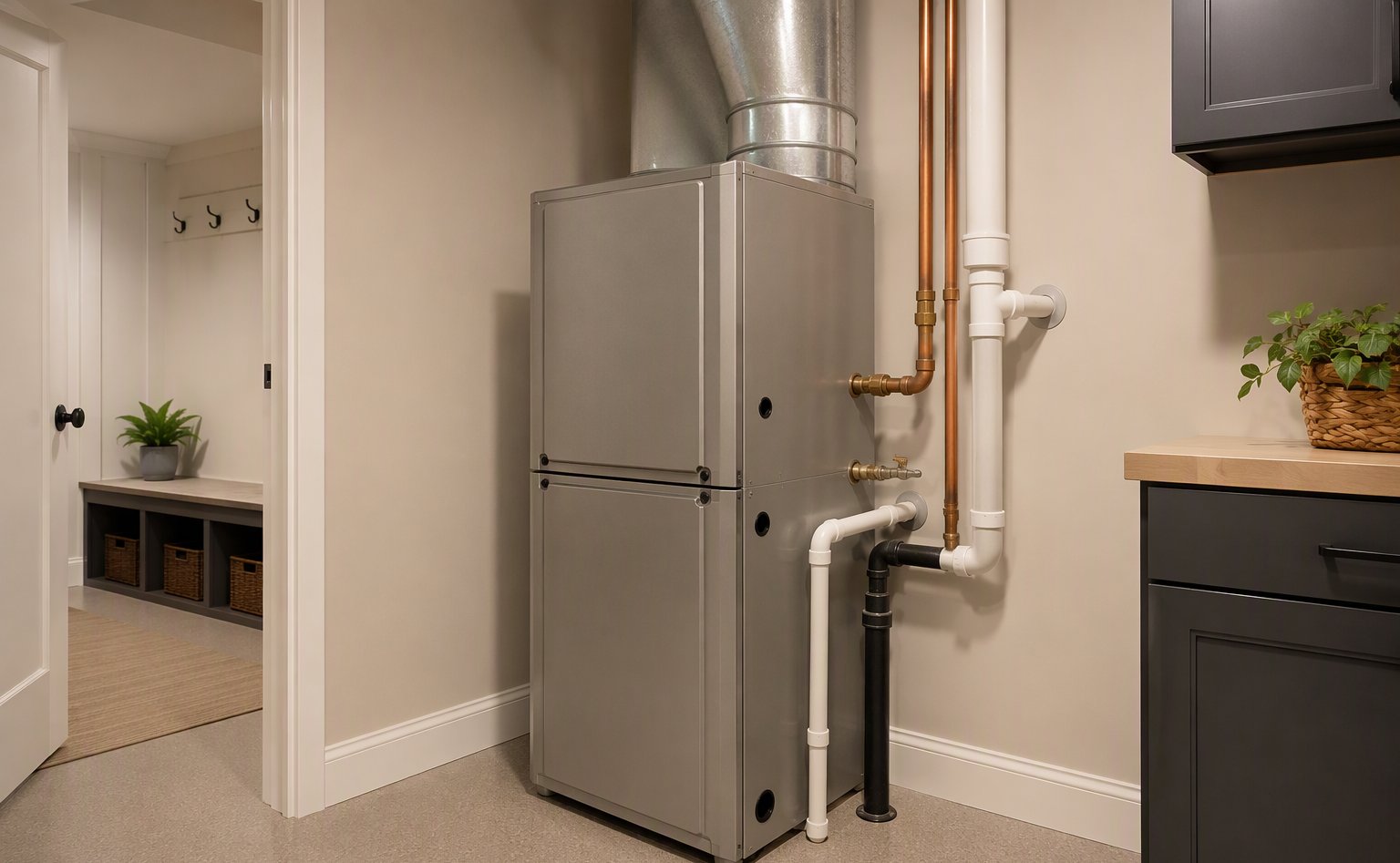
The tech finds the problem, quotes the repair, and then comes the pause: the furnace is fifteen years old. Is this fix a smart investment, or money into a machine that’s nearly done? There’s no universal answer — but there is a clean way to think about it.
The factors that actually matter
Age: Furnaces typically run 15–20 years with maintenance. Under 12, repair is usually the call. Over 18, replacement usually is. The 12–18 band is the gray zone where the other factors decide.
The repair itself: A common rule of thumb: if the repair costs more than a third of replacement on a furnace past mid-life, replacement deserves a serious look. A $300 ignitor on a 14-year-old furnace? Fix it and move on. A cracked heat exchanger? Different conversation entirely.
Efficiency: An older 80% furnace sends a fifth of your gas money up the flue. A 95%+ unit keeps it. Over a Front Range heating season, that gap is real money every single month — and it belongs in the math, not just the brochure.
Safety: This one isn’t negotiable. A failed heat exchanger can leak combustion gases into your air. If that’s the diagnosis on an older unit, replacement isn’t an upsell — it’s the answer.
The Aurora-specific wrinkle
At 5,400 feet, furnaces work in thinner air and need proper derating — an older unit that was never set up for elevation has been working harder than its rating suggests its whole life. That hidden wear is worth weighing when a borderline furnace hits a big repair: the calendar age may undersell the real mileage.
Timing the decision
The worst time to replace is during a January cold snap with a dead furnace — you’re deciding under pressure, at emergency pace. The smartest time is fall, on your schedule, before the season’s first real cold. If your furnace is in the gray zone, an honest inspection in October buys you a calm decision instead of a desperate one.
What we’ll tell you
On any repair call, you get the full picture: what’s broken, what it costs to fix, what shape the rest of the system is in, and what replacement would run. The decision is yours. Our job is making sure it’s an informed one.
House telling you something? Una llamada.
Describe the symptom — get a straight answer and a tech on the way, 24/7.